

Overcoming Imposter Syndrome: Why It’s Like Facing the Mirror
Ever feel like you’re a professional undercover agent waiting to get ‘found out’? Here’s how to outsmart your inner critic and finally own your expertise.

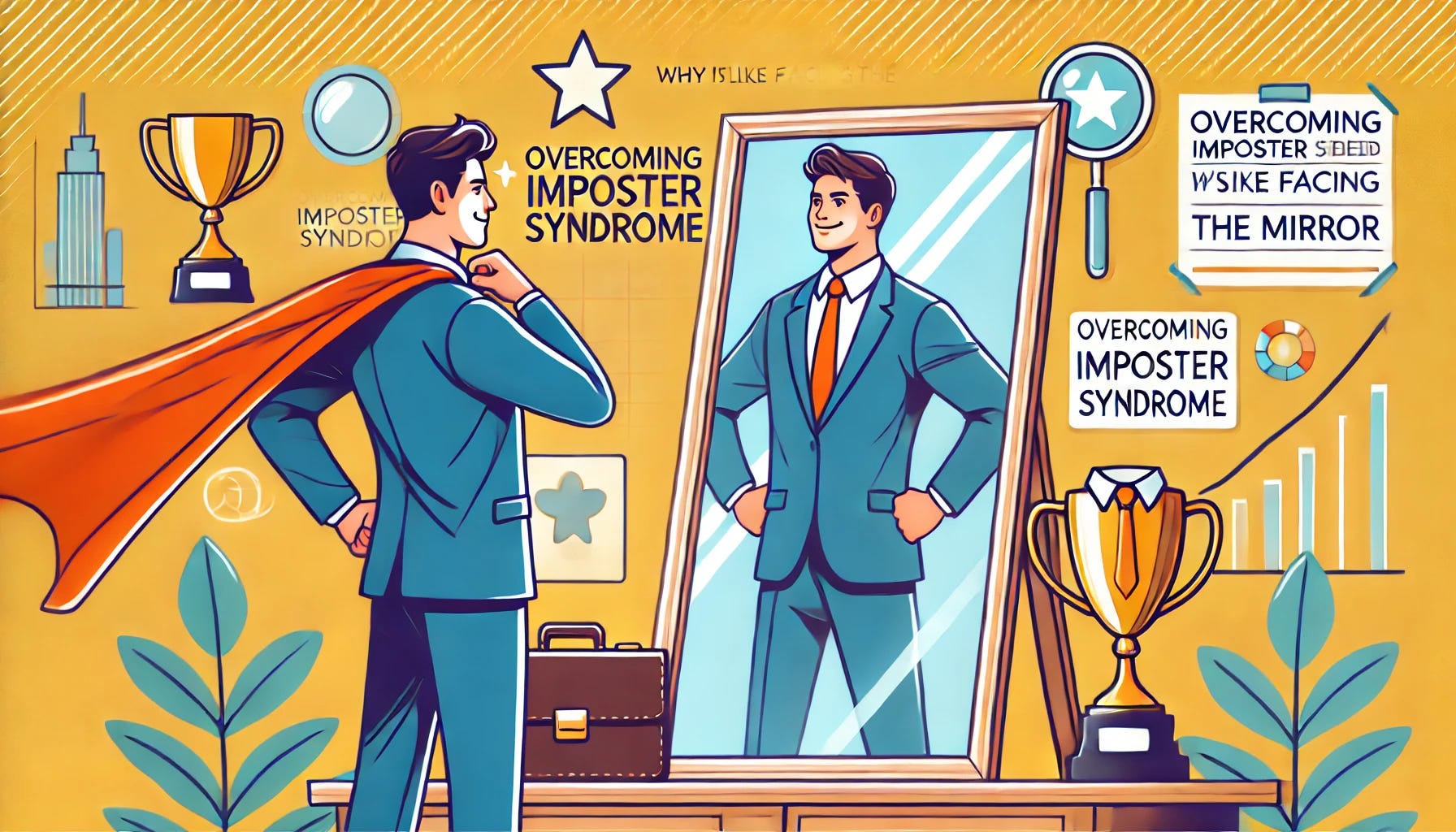
The Dreaded “Imposter Syndrome” Mirror
You know that feeling when you look in the mirror after waking up, and you’re like, “Is that me?” Now imagine that feeling—but for your entire career. That's imposter syndrome. It’s like looking in the mirror, seeing a reflection, and saying, “Who on Earth let this person into a professional setting?”
You’re not alone! Imposter syndrome is that sneaky little voice in your head saying, “You're not good enough. Any second now, someone’s going to figure out you’ve been faking it this whole time.” But here’s the truth: if everyone who felt imposter syndrome was faking it, there’d be a lot more CEOs out there with literal “In Training” badges.
Today, let’s dive into why overcoming imposter syndrome is like facing the mirror—embracing what you see and learning to appreciate it.
Imposter Syndrome is Like Your Mirror Saying “You Can’t Pull Off That Outfit”
Imagine you’ve picked out a fabulous outfit that feels bold, professional, and perfect for your next career move. You look in the mirror, and suddenly, a doubt creeps in. “Am I someone who wears red?” “Can I pull off these power heels?” That’s imposter syndrome. It’s your reflection saying, “Whoa there, let’s stick to neutral tones and comfy shoes.”
What’s the solution here? You have to own that outfit. Just like any career achievement, confidence comes from embracing what you bring to the table. Wearing red (or applying for that big role, or taking on that new project) doesn’t need approval from your reflection; it needs approval from YOU. Imposter syndrome thrives when you doubt your ability to handle new challenges. So, choose to face it, style it, and stand tall in your metaphorical (or literal) heels.
Where Does Imposter Syndrome Come From?
Ironically, it often pops up in the most accomplished individuals. When you’re stretching your limits and aiming for new heights, self-doubt can creep in as your mind adjusts to the “new you.” Many people feel like their accomplishments are sheer luck or that any recognition they receive is undeserved.
A Harvard Business Review study found that about 70% of people will experience imposter syndrome at some point in their careers. So, if you’re in that club, you’re not only in good company—you’re in the company of some of the most driven, talented people out there.
Imposter Syndrome is Like a Funhouse Mirror
Ever been to a carnival and looked at those mirrors that make you look like a short, squat version of yourself? That’s what imposter syndrome does to your professional image. You might be a skilled manager, a creative genius, or a coding wizard, but imposter syndrome has a way of distorting that image to make you feel smaller and less competent.
Here’s the trick: recognize that you’re looking into a “funhouse mirror.” The achievements you see as small are significant. It’s the mirror that’s skewed—not your accomplishments. The best way to combat this distorted reflection is to list out your wins. Write down every project you led, every compliment from a colleague, and every skill you learned. These aren’t small accomplishments—they’re massive steps in your professional journey.
Tips to Stop Feeling Like an Imposter (Even When the Mirror Says Otherwise)
1. Track Your Wins
Whenever you achieve something—big or small—write it down. Keep a ‘Brag Book’ on your phone or in a journal. The next time imposter syndrome sneaks up, you’ll have hard evidence to silence it.
2. Remember: Even Superheroes Have Origin Stories
Not every professional started as a master of their craft. Even the best in the game were once “imposters” who didn’t know the ropes. Give yourself the grace to grow and learn.
3. Share Your Feelings
Talk to someone you trust—colleagues, mentors, or friends. Often, sharing your feelings exposes the self-doubt for what it is: a shared, universal experience. Plus, it’s a great reminder that everyone feels this way at times.
4. Avoid Comparison Traps
Comparing yourself to others is like looking in the mirror and thinking you’re supposed to be someone else. Your journey is unique. Focus on your progress, not on how others appear.
5. Fake It Till You Become It
Sometimes the quickest way to quiet imposter syndrome is to step right into the role. Say “yes” to that project. Take on that leadership task. Eventually, you won’t feel like an imposter at all because you’ll be that confident professional.
Reflecting on Your Professional Mirror
Think of the mirror as a tool to help you see what’s truly there, not to create a fictional story about what’s missing. Imposter syndrome thrives on highlighting the gaps, the doubts, and the “what ifs.” Your job is to face that reflection and say, “I’ve earned my place here.”
Imposter syndrome is part of the journey, especially as you grow. Each time you push past it, you’re building an internal trust muscle. You’re telling yourself, “I see you. I believe in you.” So next time you’re staring down your professional reflection, remember: what you’re seeing is someone worthy, accomplished, and deserving of success.